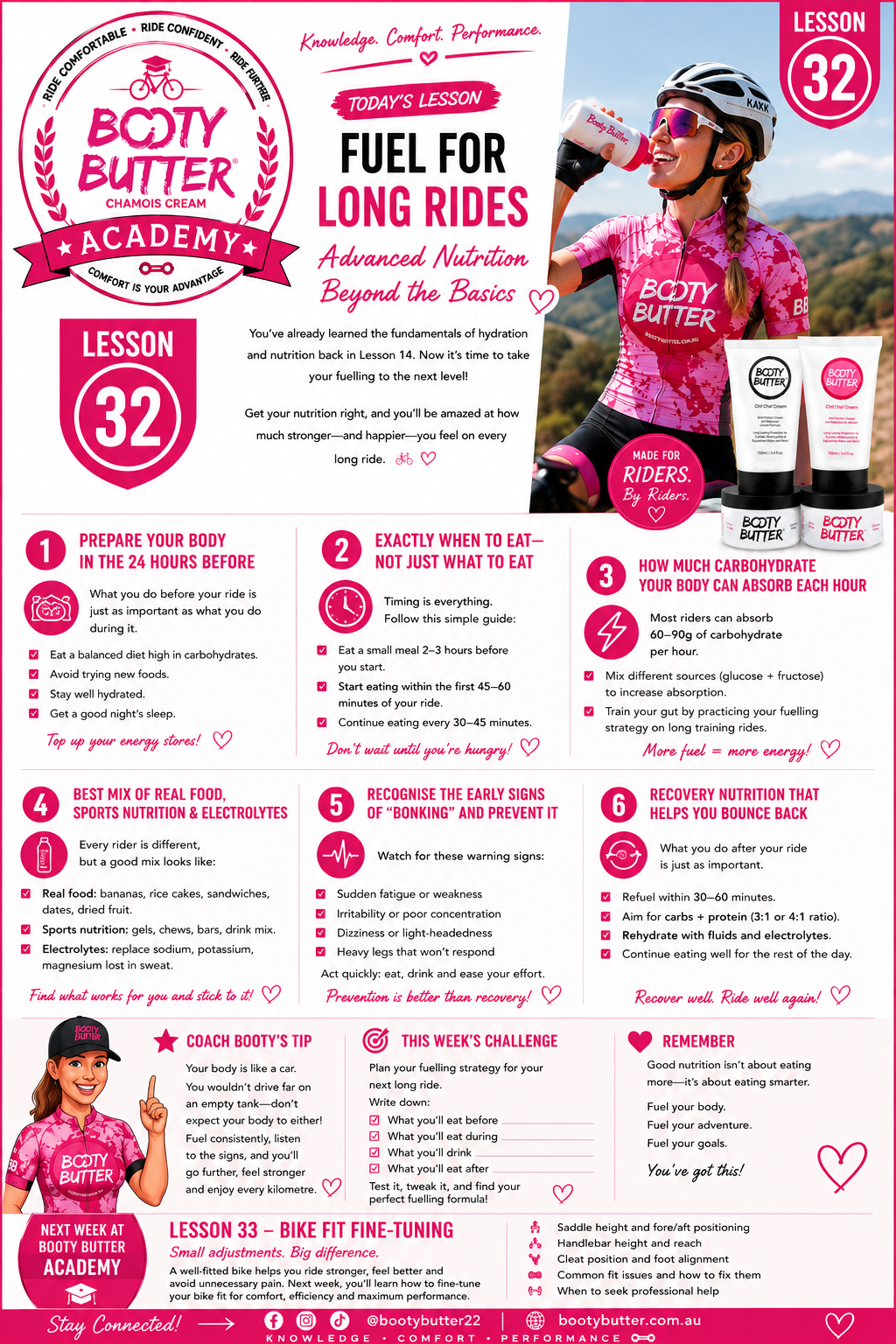
Lesson 32 - Fuel for Long Rides
🎓 BOOTY BUTTER ACADEMY Lesson 32 – Fuel for Long Rides
Advanced Nutrition Beyond the Basics
You've already learned the basics of hydration and nutrition back in Lesson 14. Now it's time to take your fuelling to the next level. Whether you're tackling your first 100 km ride, a charity event, a gravel adventure or an all-day social ride, your nutrition can make the difference between feeling strong at the finish—or struggling through the final kilometres.
The good news?
You don't need to be a professional cyclist to fuel like one.
🍽️ 1. Fuel Starts the Day Before
Many cyclists focus only on what they eat during the ride. Experienced riders know the preparation begins much earlier.
The day before a long ride:
✅ Eat balanced meals.
✅ Include plenty of carbohydrates.
✅ Stay hydrated throughout the day.
✅ Avoid excessive alcohol.
✅ Get a good night's sleep.
Think of it as arriving at the start line with a full fuel tank.
🌅 2. Never Skip Breakfast
Your body has been fasting overnight. A good breakfast replenishes your energy stores and prepares your muscles for the ride ahead.
Aim to eat around 2–3 hours before the start. Choose foods that are familiar and easy to digest, such as:
🥣 Porridge
🍞 Toast with peanut butter or jam
🍌 Banana
🥯 Bagel
🥣 Yoghurt with fruit
Avoid trying new foods on event day—you never know how your stomach will react.
⏰ 3. Eat Before You're Hungry
One of the biggest mistakes cyclists make is waiting until they feel hungry. By then, you're already running low on energy.
Instead: 🍌 Start eating within the first 45–60 minutes of your ride. Then continue eating small amounts every 30–45 minutes. Little and often is far more effective than one big snack.
🍌 4. Mix Up Your Fuel
You don't have to rely on expensive sports products. Many cyclists successfully combine:
🍌 Bananas
🥪 Small sandwiches
🍙 Rice cakes
🍫 Energy bars
🍬 Lollies or jelly snakes
🥔 Boiled potatoes
🥨 Pretzels
🥜 Trail mix
Sports nutrition has its place, but real food works well too. Find what suits your stomach.
💧 5. Hydration Is More Than Water
When you're riding for several hours, you lose both water and electrolytes through sweat. Depending on the weather and your sweat rate, consider including:
💧 Water
⚡ Electrolyte tablets
🥤 Sports drink
On hot days, replacing electrolytes can help maintain performance and reduce the risk of cramps.
⚠️ 6. Learn to Spot the Bonk
Cyclists often talk about "bonking." This happens when your body runs low on available carbohydrate and your energy drops dramatically.
Common signs include:
😵 Feeling suddenly weak
🤯 Difficulty concentrating
🦵 Heavy legs
😴 Extreme fatigue
🍫 Strong cravings for sugary foods
The best cure? Don't let it happen in the first place. Fuel consistently from the beginning of your ride.
🥤 7. Recovery Starts Before the Ride Ends
Recovery isn't something you think about after the finish line. It starts during the ride by keeping your body fuelled.
Within 30–60 minutes of finishing, aim to enjoy:
🍗 Protein
🍚 Carbohydrates
💧 Plenty of fluids
Good recovery means you'll feel stronger tomorrow—not sore and exhausted.
⭐ Coach Booty's Tip
Don't copy someone else's nutrition plan. Every cyclist is different. What works perfectly for your riding buddy might upset your stomach. Experiment during training—not on event day—and discover what fuels you best.
🎯 This Week's Challenge
Plan your nutrition for your next ride over 90 minutes. Before you leave, decide:
🥣 What you'll eat before the ride.
🍌 What you'll eat during the ride.
💧 How much you'll drink.
🥤 What you'll have afterwards for recovery.
Having a plan removes the guesswork and helps you ride with confidence.
💗 Remember Your bike runs best when it's properly fuelled. So do you. Strong riders aren't just built through training—they're built through smart nutrition. Feed your body well, and it will reward you with more energy, faster recovery and more enjoyable rides.
💗Ride Comfortable. Ride Confident. Ride Further.💗
🎓 Next Week at Booty Butter Academy
Lesson 33 – Bike Fit Fine-Tuning Small Adjustments. Massive Difference.
You don't always need an expensive professional bike fit to become more comfortable. Sometimes, a few millimetres can transform your ride.
Next week you'll learn how to fine-tune your bike for greater comfort, efficiency and confidence.
We'll cover:
🚴 Saddle height and fore/aft position
📏 Handlebar reach and comfort
🖐️ Hand pressure and numbness
🦵 Knee alignment and pedalling efficiency
💺 Small adjustments that can prevent big problems
Discover how tiny changes can make every ride smoother, more efficient and far more enjoyable.