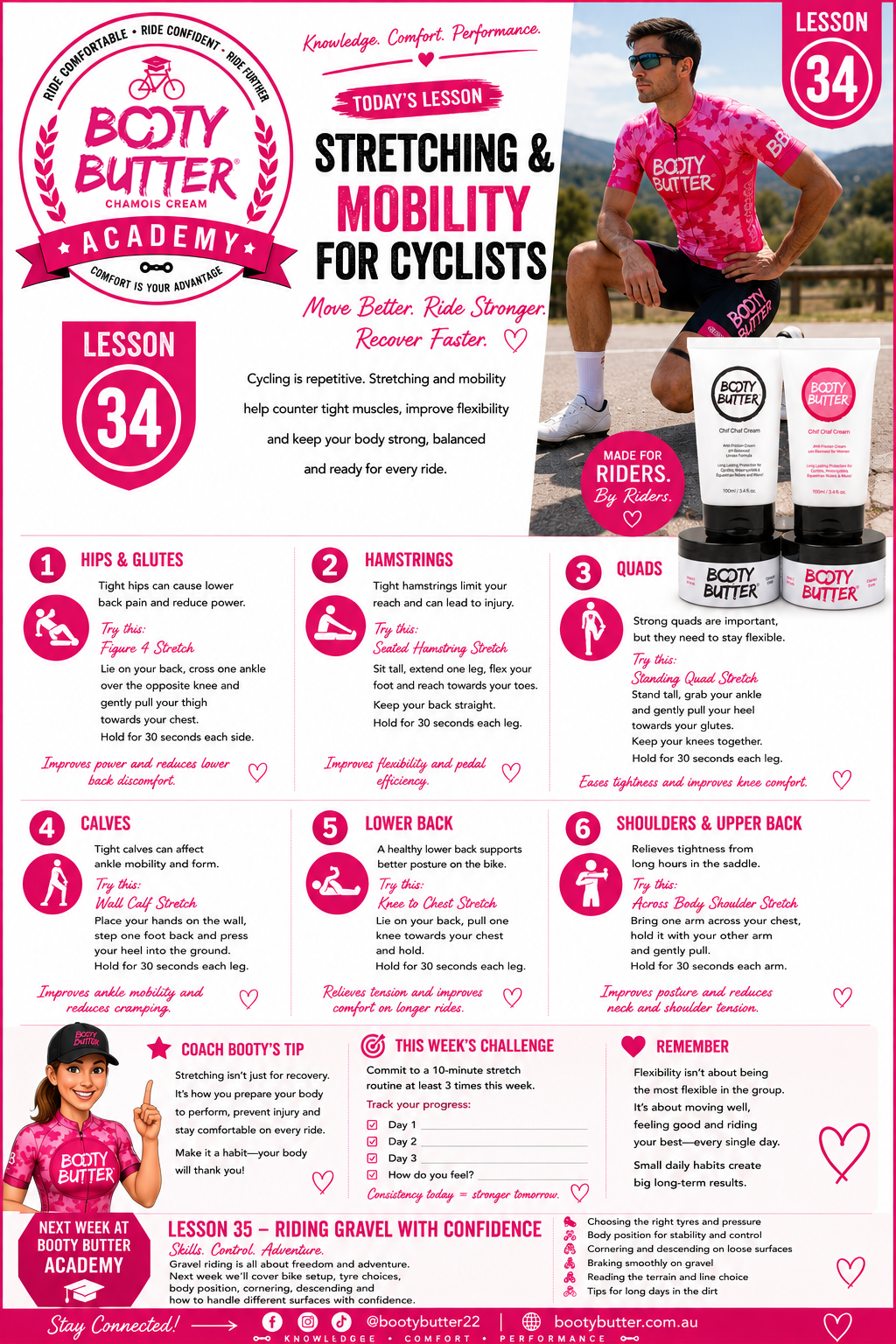
Lesson 34 – Stretching & Mobility for Cyclists
🎓 BOOTY BUTTER ACADEMY Lesson 34 – Stretching & Mobility for Cyclists
Recover Better. Ride Better. Ride Longer.
Cycling is fantastic for your fitness—but because you're repeating the same pedalling motion thousands of times each ride, certain muscles become tight while others become weak.
Over time, this can lead to:
- Tight hips
- Stiff hamstrings
- Sore lower back
- Tight calves
- Aching shoulders and neck
🧘 1. What's the Difference?
People often use the terms stretching and mobility interchangeably, but they're slightly different. Stretching improves the flexibility of your muscles. Mobility improves how well your joints move through their full range of motion. You need both to ride comfortably.
🚴 2. Why Cyclists Get Tight
Cyclists spend hours in the same riding position.
This can tighten:
✔ Hip flexors
✔ Hamstrings
✔ Glutes
✔ Calves
✔ Chest muscles
At the same time, your upper back and core can become weak if they aren't exercised outside of cycling. That's why adding a little mobility work can have such a big impact.
⏰ 3. When Should You Stretch?
The best time is after your ride, when your muscles are warm. Avoid deep stretching before riding.
Instead: Before your ride:
- Gentle mobility movements
- Easy leg swings
- Arm circles
- Light warm-up
- Longer stretches
- Slow breathing
- Relaxed movements
🦵 4. Five Areas Every Cyclist Should Stretch Focus on the muscles that work hardest.
Hip Flexors Tight hips can lead to lower back pain and reduced pedalling efficiency.
Hamstrings Flexible hamstrings help you pedal smoothly and comfortably.
Calves Your calves absorb thousands of pedal strokes every ride. Keeping them loose reduces fatigue.
Glutes Strong, flexible glutes produce power and help stabilise your hips.
Chest & Shoulders Hours leaning over the handlebars can tighten your chest and shoulders. Opening these muscles improves posture and reduces neck tension.
🌬️ 5. Don't Forget to Breathe
One of the biggest mistakes people make while stretching is holding their breath.
Instead:
🌬️ Breathe slowly.
🌬️ Relax into each stretch.
🌬️ Never force your body.
Stretching should feel relieving—not painful.
💪 6. Mobility Builds Better Riders Improved mobility can help you:
✔ Ride longer without discomfort.
✔ Corner more confidently.
✔ Climb more efficiently.
✔ Stay comfortable in the saddle.
✔ Reduce overuse injuries.
Mobility isn't just about flexibility—it's about moving well on and off the bike.
⭐ Coach Booty's Tip Consistency beats intensity. Five to ten minutes after every ride is far more valuable than one long stretching session once a month. Build it into your routine, just like cleaning your bike or checking your tyre pressure. Small habits create big improvements.
🎯 This Week's Challenge After your next three rides: 🧘 Spend 10 minutes stretching.
Include:
✔ Hip flexors
✔ Hamstrings
✔ Calves
✔ Glutes
✔ Chest
Notice how your body feels before your next ride. Most cyclists are surprised how much fresher they feel.
💗 Remember Recovery isn't about doing less. It's about preparing your body to do more. The stronger and more mobile you become, the more you'll enjoy every kilometre. Your future self will thank you for taking just a few minutes to recover properly.
💗 Ride Comfortable. Ride Confident. Ride Further. 💗
🎓 Next Week at Booty Butter Academy Lesson 35 – Riding Gravel with Confidence Discover a Whole New World of Cycling.
You don't need a gravel bike to enjoy riding on gravel roads. Many road cyclists find themselves on rail trails, country roads, bike paths or short gravel sections during their adventures.
Next week you'll learn how to stay relaxed, confident and in control when the pavement ends.
We'll cover:
🛞 How to adjust your tyre pressure for better grip.
⚖️ Body position for loose surfaces.
👀 Where to look when riding on gravel.
🚴 Braking and cornering techniques.
😊 How to build confidence without feeling intimidated.
Once you know the basics, gravel opens the door to quieter roads, incredible scenery and exciting new cycling adventures.