Lesson 27 - Choosing the Right Tyre Pressure
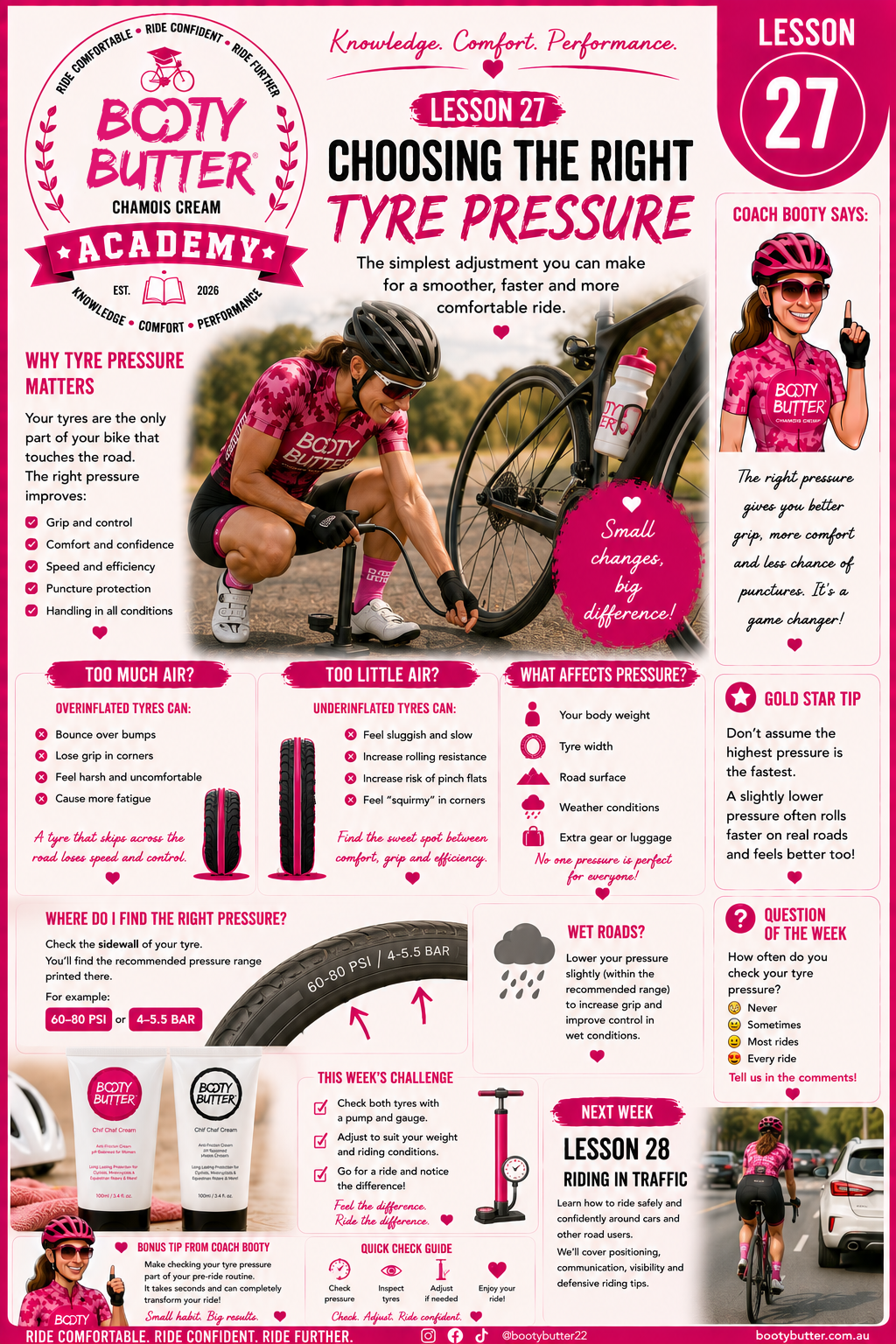
🎓 BOOTY BUTTER ACADEMY Lesson 27 – Choosing the Right Tyre Pressure
The simplest adjustment you can make for a smoother, faster and more comfortable ride.
Most cyclists spend hundreds—or even thousands—of dollars upgrading their bike, yet many overlook one of the biggest performance boosters of all: tyre pressure.
The right tyre pressure can improve your comfort, grip, speed and confidence. The wrong pressure can leave you bouncing over every bump, struggling for traction, or even risking a puncture.
The good news? It's one of the easiest things to get right.
Why Tyre Pressure Matters
Think of your tyres as your bike's suspension. They're the only part of your bike touching the road, so how much air they contain affects almost everything about your ride.
With the correct pressure you'll enjoy:
✔ Better grip through corners
✔ A smoother, more comfortable ride
✔ More confidence on rough roads
✔ Lower chance of pinch flats
✔ Improved control in wet conditions
✔ Better efficiency over long rides
✔ A smoother, more comfortable ride
✔ More confidence on rough roads
✔ Lower chance of pinch flats
✔ Improved control in wet conditions
✔ Better efficiency over long rides
Too Much Air?
Many new cyclists assume that pumping tyres as hard as possible makes them faster.
In reality, tyres that are overinflated can:
❌ Bounce over rough surfaces instead of rolling smoothly
❌ Lose grip in corners
❌ Feel harsh and uncomfortable
❌ Cause more fatigue over long rides
❌ Lose grip in corners
❌ Feel harsh and uncomfortable
❌ Cause more fatigue over long rides
A tyre that skips across the road actually loses speed and control.
Too Little Air?
Running pressures that are too low isn't ideal either.
You may notice:
❌ Sluggish handling
❌ Increased rolling resistance
❌ Greater chance of pinch flats
❌ Tyres feeling "squirmy" through corners
❌ Greater chance of pinch flats
❌ Tyres feeling "squirmy" through corners
The goal is to find the sweet spot between comfort, grip and efficiency.
Things That Affect Your Ideal Pressure
There isn't one perfect pressure for everyone.
It depends on:
- Your body weight
- Tyre width
- Road surface
- Weather conditions
- Whether you're carrying extra gear
Wet Roads?
Lowering your pressure slightly (within the tyre manufacturer's recommended range) can help increase grip on wet roads.
That extra contact with the road can make cornering and braking feel much more predictable.
Where Do I Find the Recommended Pressure?
Look at the sidewall of your tyre. You'll usually find a recommended pressure range printed there.
For example: 60–80 PSI or 4–5.5 Bar. This gives you a safe operating range to work within.
Coach Booty's Tip ⭐ Don't assume the highest pressure is the fastest. Modern research has shown that a slightly lower pressure often rolls faster on real roads because the tyre absorbs bumps instead of bouncing over them. Your body—and your bike—will thank you.
🎯 This Week's Challenge Before your next ride:
- Check both tyres with a pump that has a pressure gauge.
- Adjust them to suit your weight and riding conditions.
- Pay attention to how the bike feels.
💗 Remember A few seconds with a bike pump can completely change your ride.
Ride Comfortable. Ride Confident. Ride Further. 💗
Next Week at Booty Butter Academy
Lesson 28 – Riding with Traffic
Learn how to ride safely and confidently around cars, buses and other road users, including lane positioning, communication, visibility and defensive riding techniques.